
Pride in Place: Turning Local Insight into Visible Change
Across the UK, the condition of our town and city centres remains one of the most tangible ways people judge the success of their communities. From high streets to parks and public squares, these everyday environments shape how people feel about where they live.
Recent polling highlights how strongly people feel about these issues. A 2025 Ipsos survey found that 79% of Brits are concerned about the decline of their local high street. The scale of this concern helps explain why the condition of public spaces has become an increasing political priority.
The Government’s Pride in Place initiative is the latest in a series of town and neighbourhood investment programmes designed to support and revitalise ‘left behind’ neighbourhoods across the country. The scheme will see up to £5 billion invested in around 250 neighbourhoods (up to £20 million per neighbourhood spread across ten years). While the initiative has evolved in name and structure, the central aim remains the same as those that preceded it: delivering visible improvements to the places people experience every day.
But Pride in Place introduces a shift in how those improvements are shaped.
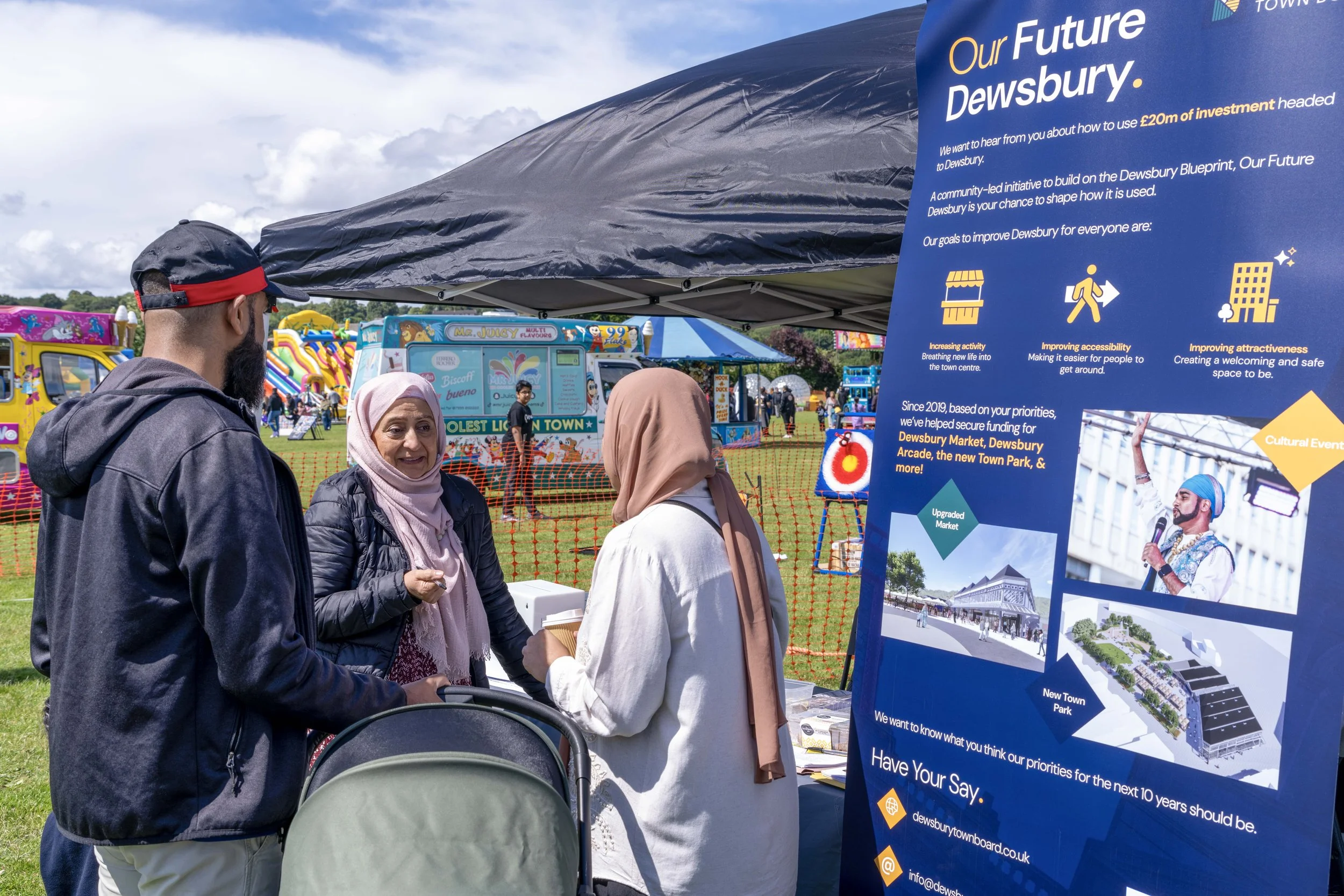
Community engagement at the Kumon Y’all event in Dewsbury | Dewsbury Long-Term Plan - photo credit: Heather Magner, Northern Exposure Photos & Videos
Neighbourhood Boards: A New Model for Local Engagement
A defining feature of the programme is its emphasis on community engagement and local legitimacy. Across the country, Neighbourhood Boards are being established to bring together councils, businesses, community organisations and residents to guide investment and priorities.
Partnership boards themselves are not new in regeneration policy, but their formal role in developing local initiatives is. Through engagement with local communities, each board will be expected to develop a shared vision for the future of their area and outline the steps needed to deliver it over the 10-year programme and beyond.
When delivered effectively, this approach can transform the impact of place-based programmes. Comprehensive and sustained engagement helps ensure that projects reflect genuine local priorities, rather than assumed ones. It builds credibility around investment decisions and creates a sense of ownership among the communities they are intended to serve. Organisations with roots in the community are treated as partners – rather than stakeholders to be managed – whose insights and connections add real value to the projects.
At Counter Context, we have seen the success of this approach first-hand through our work with Dewsbury Neighbourhood Board and Kirklees Council to gather meaningful local insight for the town’s Long Term Plan. Through a comprehensive engagement programme in 2024-25, Dewsbury Neighbourhood Board built up a strong evidential base for their investment programme, as well as building local support for proposals from the outset.
Balancing Community Voices with Practical Delivery
Delivering meaningful engagement is not without its challenges. While communities may generate a wide range of ideas, funding and delivery constraints mean that not every suggestion can be implemented. Managing expectations therefore becomes a central part of the process.
This challenge is further complicated by the fact that communities often contain competing priorities. Navigating these tensions is likely to be one of the defining challenges Boards face as they work to incorporate community feedback into project deliverables.
Organisations experienced in community engagement can play an important role in supporting Boards to navigate these challenges, helping ensure that engagement remains inclusive, transparent and focussed on developing practical solutions.

Community engagement stall at the Kumon Y’all event in Dewsbury | Dewsbury Long-Term Plan - photo credit: Heather Magner, Northern Exposure Photos & Videos
What Does All This Mean in Practice?
Government guidance is explicit about the expectations: Boards are expected to develop plans for “deep, broad and sustained engagement” with their communities.
Many will be starting from scratch when it comes to designing and delivering engagement at this scale. Stakeholder mapping, developing consistent messaging and delivering an accessible programme of engagement events, can pose a challenge to Boards who wish to ensure engagement is well-structured and capable of shaping deliverable plans for their area.
If your Board is preparing to develop its Pride in Place initiative, now is the time to ensure your engagement approach is strong from the start. Get in touch to find out how we can support your community to turn local insight into real, visible change.